
There are few places in the world where anglers can experience the diversity of fly fishing found in Argentine Patagonia. One morning you might be wading a spring creek, presenting tiny dries to selective brown trout. By afternoon, you're stripping articulated streamers through deep cutbanks in search of the fish of the week. The next day, you're skating hoppers along willow-lined banks as trout explode from beneath undercut edges.
At El Encuentro Fly Fishing, every season brings new opportunities, and every watershed has its own personality. While fly boxes inevitably grow heavier as anglers prepare for Patagonia, there are a handful of patterns that consistently earn their place on the leader. These are the flies guides reach for day after day—patterns that have proven themselves across rivers, lakes, and changing conditions.
If you're wondering what to pack for your next visit to one of our lodges, start with these five:
1. Chubby Chernobyl: The Ultimate Patagonian Attractor
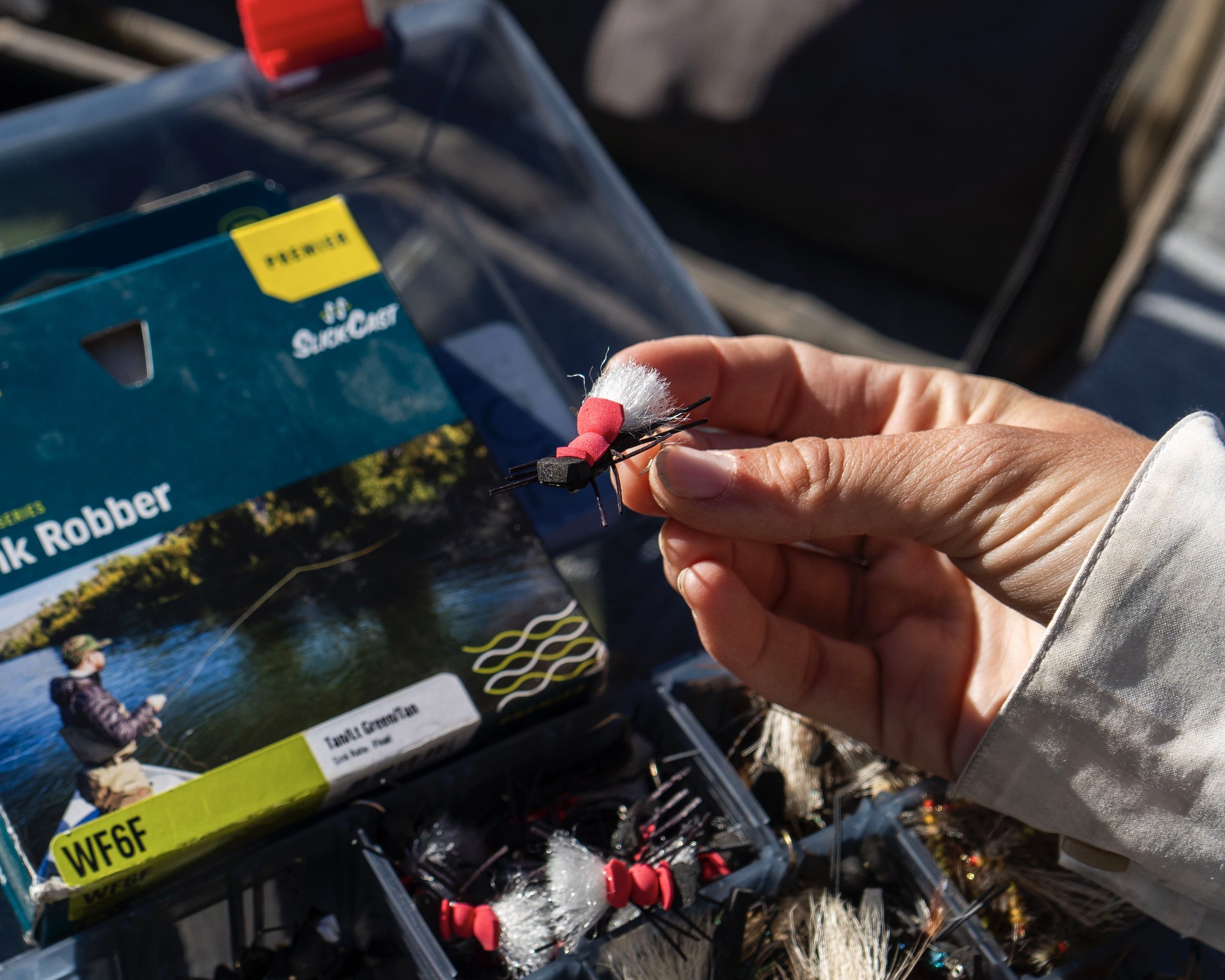
If Patagonia had an unofficial regional fly, the Chubby Chernobyl would be a leading contender.
Originally developed as a high-floating terrestrial imitation, the Chubby has become one of the most versatile flies in modern trout fishing. Its buoyant foam body keeps it riding high through heavy pocket water and long riffles, while its oversized profile suggests everything from large grasshoppers and beetles to stoneflies and even the occasional mouse struggling across the surface.
In Patagonia, that's exactly what makes it so effective.
Throughout the season—especially from January through March—large terrestrial insects become an important food source. Winds regularly sweep hoppers, beetles, and other insects from surrounding grasslands into the water, and trout quickly learn to capitalize.
The Chubby excels not only as a standalone dry but also as an indicator fly in dry-dropper rigs. Its flotation easily supports weighted nymphs while remaining highly visible in broken water. Guides at El Encuentro rarely head out without several colors and sizes tucked into their boxes. Tan, golden yellow, purple, and pink all have their moments, though tan remains a perennial favorite.
Recommended sizes: #6–12.
2. Rubber Legs Stonefly: Patagonia's Big Meal
Few aquatic insects inspire confidence like a large stonefly nymph.
While Patagonia doesn't experience the legendary salmonfly hatches of the American West, sizable stoneflies inhabit many rivers throughout northern Patagonia. More importantly, trout simply love substantial meals. The Rubber Legs Stonefly combines movement, weight, and profile into one remarkably productive pattern. Long rubber appendages pulse naturally in current, while its heavily weighted body quickly reaches feeding depth.
Early in the season, when water temperatures remain cool and runoff influences flows, trout often stay close to the bottom. A well-presented stonefly nymph drifting naturally through deeper seams can entice fish that ignore smaller offerings.Many guides fish this pattern beneath a buoyant dry fly, allowing anglers to enjoy the possibility of both subsurface eats and explosive surface takes. Black remains the classic color, though coffee and golden stone variations also produce consistently.
Recommended sizes: #6–10.
3. Perdigon Nymph: Small Fly, Big Results
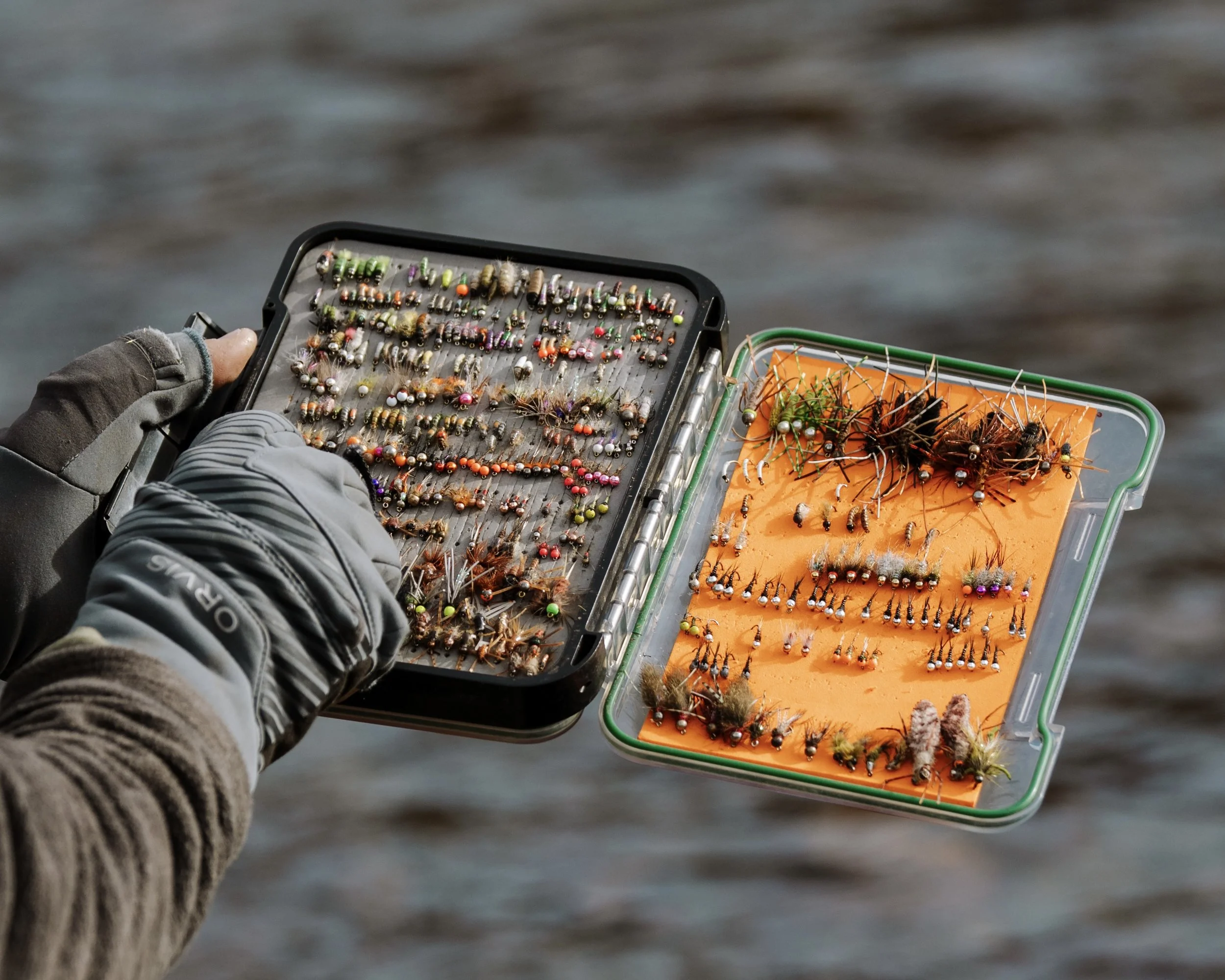
When trout become selective, simplicity often wins.
Originally developed on Spain's competitive fly-fishing circuit, the Perdigon has become indispensable around the world—including Patagonia. Its defining feature is efficiency. Slim, dense, and coated in durable UV resin, Perdigons sink quickly with minimal resistance. That allows anglers to reach feeding fish faster than many traditional nymphs.This becomes especially valuable on clear rivers where trout feed close to the bottom in swift currents.
While larger attractor nymphs often grab attention, there are plenty of days when fish prefer smaller, more natural presentations. Perdigons imitate a wide range of aquatic insects without trying to copy any one species exactly. Olive, black, and copper-bodied versions consistently produce throughout the season. Because they sink so effectively, these flies also pair beautifully beneath larger stonefly nymphs in two-fly rigs.
Recommended sizes: #14–18.
4. Mini Dungeon Streamer: Hunting Patagonia's Biggest Trout
Not every trout is interested in insects.
The largest brown trout in Patagonia didn't reach trophy size by sipping tiny mayflies all day. Big fish are opportunistic predators, happily chasing baitfish, juvenile trout, crayfish, and anything else offering a worthwhile meal.That's where articulated streamers shine.
Among the many options available, the Mini Dungeon has become a favorite for guides targeting aggressive fish. Designed by Kelly Galloup, the fly pushes water with its articulated body while maintaining a manageable size that's easy to cast throughout a long fishing day.Whether stripped quickly through lake margins, swung across current seams, or crawled beneath overhanging banks, the Mini Dungeon has an uncanny ability to provoke reaction strikes. Streamer fishing often becomes especially productive during shoulder seasons, on cloudy days, or whenever rivers carry a touch of color after rain.
White, olive, black, and natural baitfish combinations all deserve space in your fly box.Fishing streamers requires patience and confidence. Many casts may go untouched—but when a heavy Patagonian brown suddenly appears behind the fly, every retrieve becomes electric.
Recommended sizes: #2–6.
5. Parachute Adams: The Classic That Never Stops Catching Fish
Some flies become classics because they simply work. More than a century after its creation, the Parachute Adams continues fooling trout across the globe—and Patagonia is no exception.
Unlike many highly specialized dry flies, the Adams succeeds through suggestion rather than exact imitation. Its balanced silhouette resembles dozens of mayfly species, emerging insects, and general floating bugs. That versatility makes it indispensable during Patagonia's prolific hatches.
Whether fish are feeding in slow spring creeks, sipping quietly in side channels, or rising steadily along grassy banks, an appropriately sized Parachute Adams often produces when more complicated patterns fail. Its parachute post also provides excellent visibility for anglers, even in low evening light. Many experienced guides describe the Adams as the fly they tie on when they're unsure exactly what trout are eating.It's a reassuring place to start—and surprisingly often, it's the only fly needed.
Recommended sizes: #12–18
Honorable Mentions
Choosing only five flies is nearly impossible for a destination as diverse as Patagonia. Several additional patterns frequently earn time on anglers' leaders.
The Patagonia Hopper becomes indispensable during late summer, when terrestrial fishing reaches its peak. Foam beetles can save otherwise slow afternoons, particularly on calm days when trout patrol grassy banks.
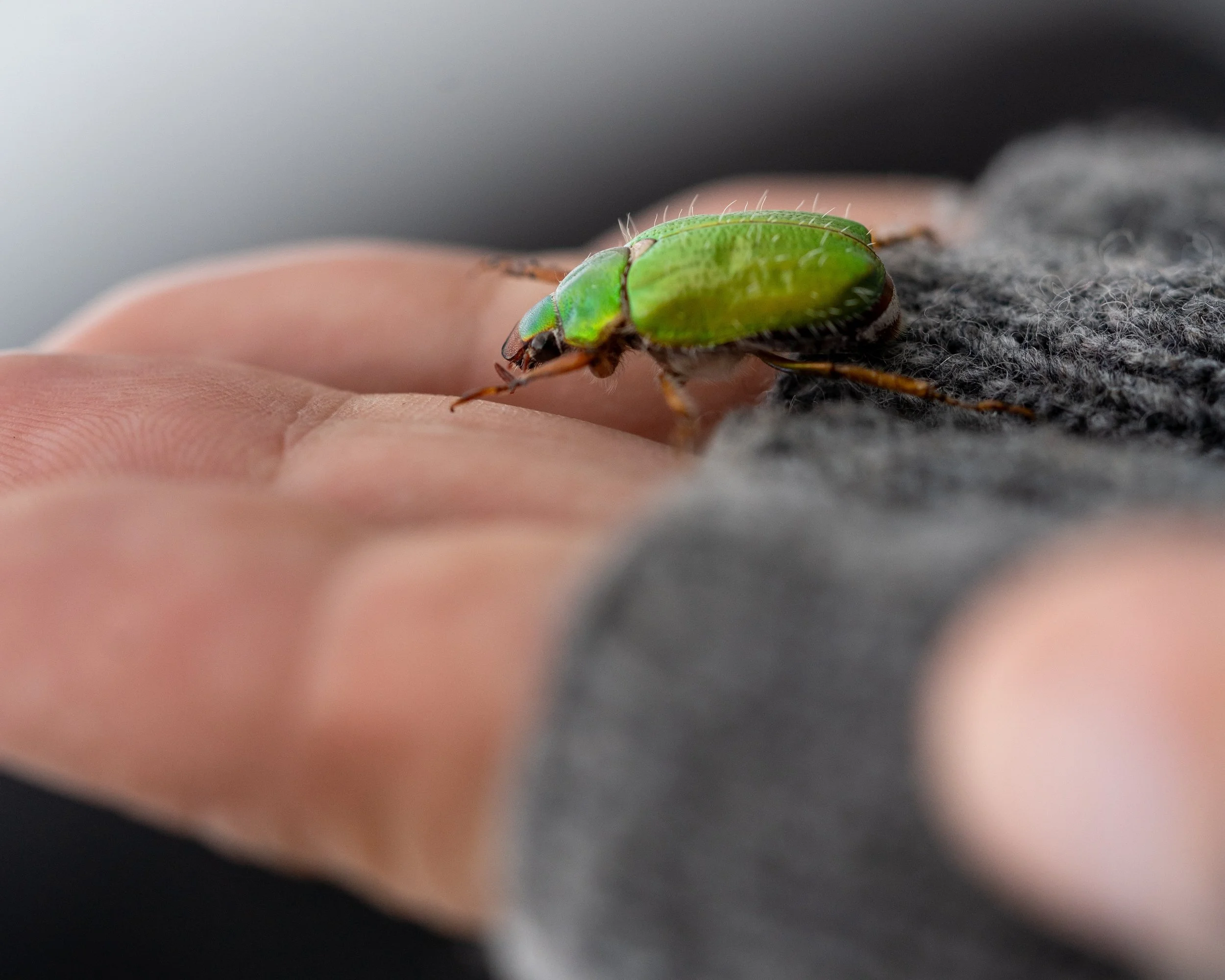
Woolly Buggers continue catching fish nearly everywhere they're fished, especially in olive and black. Small Zebra Midges often rescue technical days on spring creeks when fish become selective. Meanwhile, various caddis patterns—including the Elk Hair Caddis—remain reliable throughout much of the season.
The best fly, of course, is often the one your guide confidently hands you moments before stepping into the river.
Matching Flies to the Season
One of Patagonia's greatest strengths is that every month offers something different.
Early season (November through December) often favors larger nymphs and streamers as rivers run cooler and fish feed aggressively after winter.
Mid-summer (January and February) brings exceptional terrestrial fishing. Grasshoppers, beetles, and attractor dries become increasingly important, while dry-dropper rigs consistently produce throughout the day.
As autumn approaches in March and April, trout begin feeding heavily in preparation for winter. Streamers often dominate during overcast weather, while dependable dry flies continue producing during afternoon hatches.
Rather than carrying hundreds of patterns, successful anglers usually arrive with confidence in a handful of versatile flies—and an openness to adapting as conditions change.
Trust the Guide, Enjoy the Experience
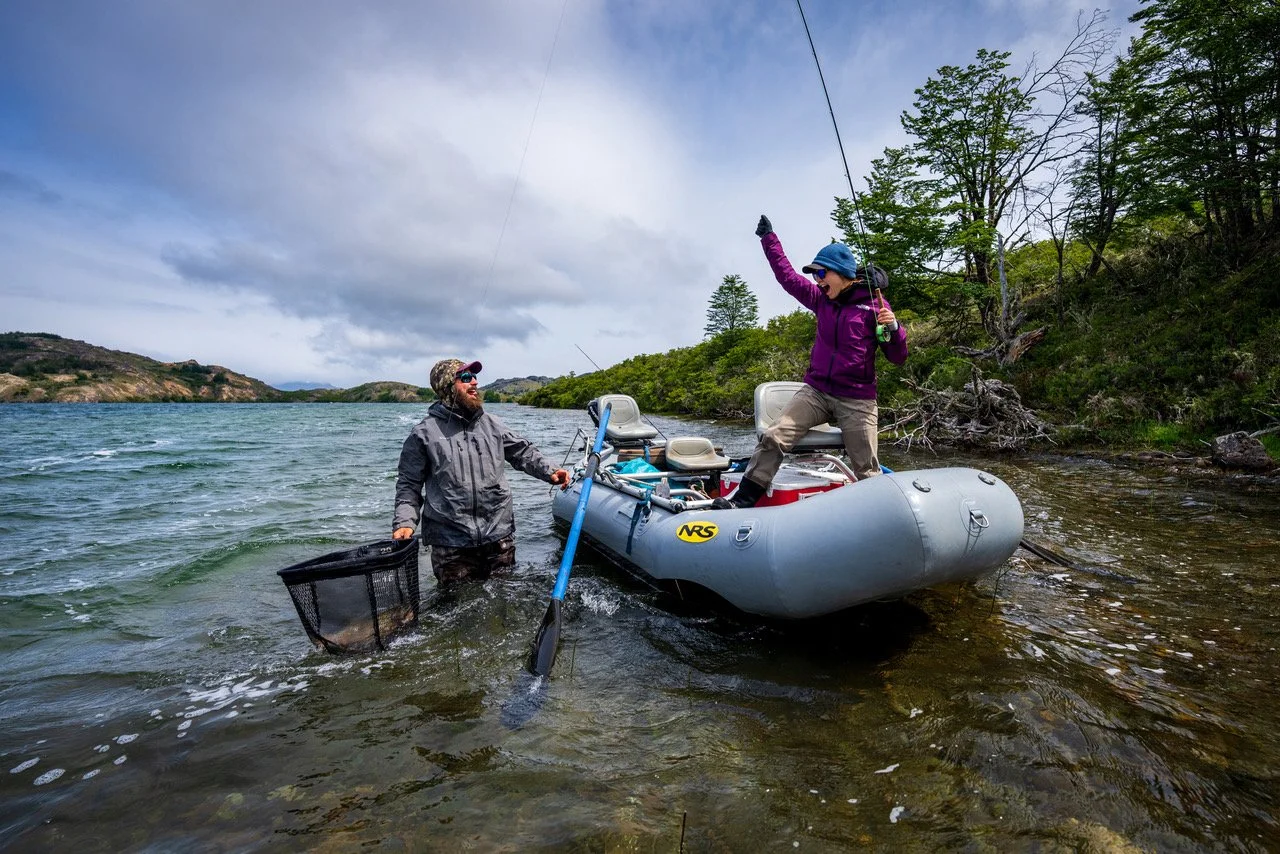
Every river tells a different story. Water levels shift, weather changes by the hour, and trout rarely read the same fishing reports we do. That's why one of the greatest advantages of fishing with El Encuentro Fly Fishing is spending time alongside guides who fish these waters every day of the season.
They know when to switch from a Chubby to a stonefly, when trout have moved into streamer water, and when downsizing to a tiny Perdigon will unlock an otherwise quiet afternoon.The flies matter. Presentation matters even more. Reading water, understanding seasonal behavior, and making subtle adjustments throughout the day often separate memorable fishing from unforgettable fishing. Fortunately, that's exactly the sort of local knowledge guests gain with every day spent on the water.
So pack a few Chubbies, a handful of stoneflies, some confidence nymphs, your favorite streamers, and enough Adams patterns to last the trip. The rest can be sorted out riverside, where Patagonia's trout—and the guides who know them best—have a way of reminding us that fly fishing is never about carrying every fly ever tied. It's about having the right one when the moment arrives.
