
How to Pack: Destination Essentials for Visiting Patagonia
Your dream trip to Patagonia is booked. You’ve planned your time off from work, made sure everything is taken care of back home, got your tickets... now, the question is what exactly should you pack?
For those of you visiting for the first time, this section is designed especially with you in mind. For our longtime guests, we know you probably know this list by heart by now, but there is always something new to think about. At El Encuentro Fly Fishing, we want you to feel relaxed from the very beginning. One important thing to know is that you can choose to travel light since we provide high-quality equipment and can supply all the necessary fishing gear at no additional cost, a popular option among many of our guests. Of course, if you prefer to bring your own equipment, or some of it, you’re more than welcome to do so. Below is a friendly overview of the essentials to keep in mind as you get ready to chase brown, rainbow, and brook trout with us in Patagonia. We’re here to help every step of the way, so let us know if you have any questions!
Rods
Most anglers that are fly fishing in Patagonia will run five, six and seven-weight fly rods. The five-weight will be your dry fly and nymphing rod (so it’s a good idea to bring two fives), and the six-weight will be rigged up for streamers. A four-weight can also be fun to play with on smaller streams, especially for single dry flies, but as Patagonia is often windy the five and six-weight rods will be your primary choices.
Reels and Lines
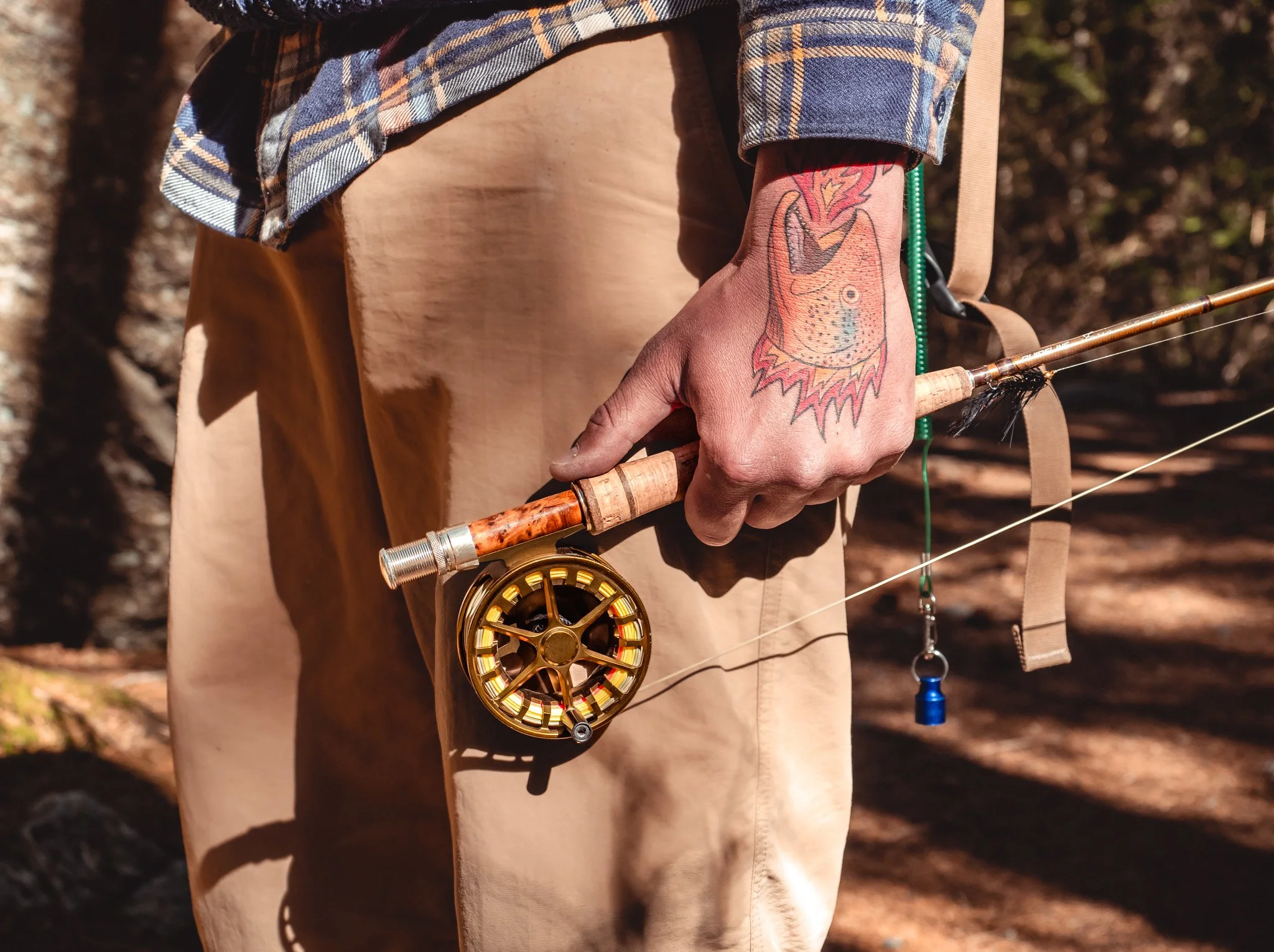
Bring along well-maintained trout fly-fishing reels loaded with roughly 100-175 yards of backing. It’s rare that a trout here will take you into your backing (though entirely possible) but it’s important to have at least that 100 yards of protection in case you hook into the fish of a lifetime. It’s a good idea to bring a spare spool with alternate fly line. You’ll mostly be fishing floating lines, but it’s a nice option for lakes to have an intermediate line, or a weight-forward streamer line for your six-weight, in addition to a more finessed dry fly line. For your 7-weight, a sinking line with a 25-foot, 200 or 250-grain shooting head will get your flies in the zone.
Terminal Tackle: Tippet and Leaders
This is often where it gets most confusing for anglers, so don’t be shy about asking your fly-fishing friends for help. We fish primarily 9-foot leaders in the 2x to 4x range, so bring along several packs of each 2x, 3x, and 4x leaders. Your 4x is used for situations with spookier fish, and we can even tie on a bit of 5x if the fish are being overly selective (this is rare, though). In our fishery 3x leaders and tippet is fairly standard, and will be used on dry flies, dry/droppers, and nymphs. Typically, your 2x is reserved for streamer fishing. Bring a spool each of 0x through 5x freshwater tippet as well. It’s easy to keep these little spools in line on a spool organizer, and that size range ensures you’ll have what you need for everything. From throwing big articulated streamers all the way down to finessing dry flies with 5x. Again, we’ll mostly be using the 2-4x, but it’s a good idea to have all your options. Plus, tippet spools are small and easy to pack!
Flies and Fly Boxes
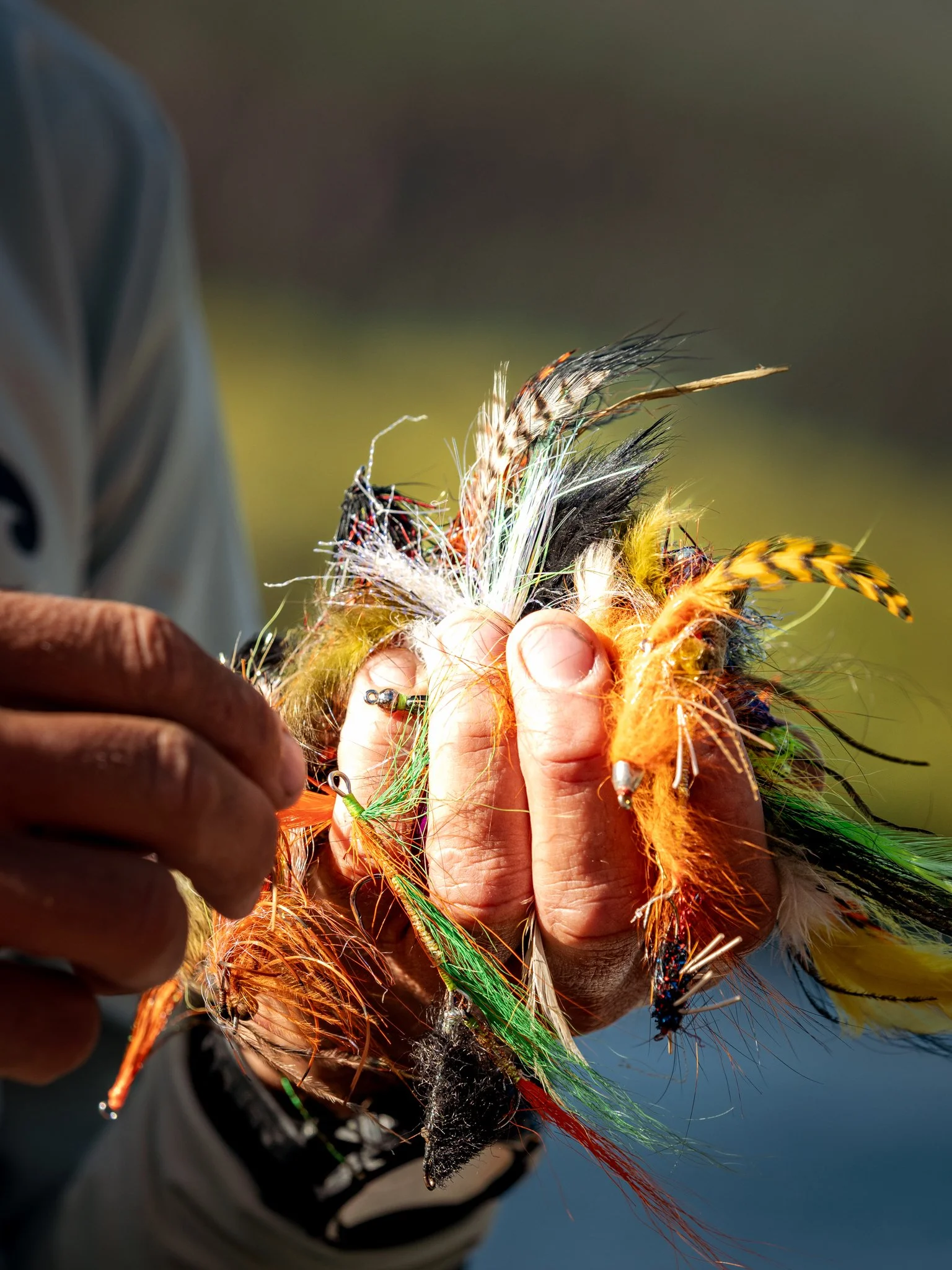
You will find that your fly box for North American fishing will be quite similar to the patterns we use, so bring along your favorites. Our guides will have anything else in their box and ready to fill in when necessary. The season you visit during plays a big role in determining what you should pack. We fish dry flies, nymphs, and streamers here, so whatever your favorite style of fishing for trout happens to be, odds are we can find a way to spend plenty of time using that tactic.
Spring Fishing (November–December)
As spring arrives in the Southern Andes, conditions can shift from day to day, so carrying a broad selection is a smart move. After a long winter without angling pressure, trout are typically eager, but water levels can fluctuate with lingering runoff. Stocking a mix of dries, larger foam creations, streamers, and a few reliable nymphs will let you adjust your presentation to whatever the river throws at you.
Summer Fishing (late December–early March)
This stretch is renowned for world-class dry-fly fishing. Terrestrials—hoppers, beetles, and ants—are the real workhorses, though it’s worth having classic mayfly and caddis patterns on hand for unexpected surface activity. Don’t overlook a selection of nymphs either; they make excellent droppers beneath big dries when fish are feeding just below the film.
Fall Fishing (March–May)
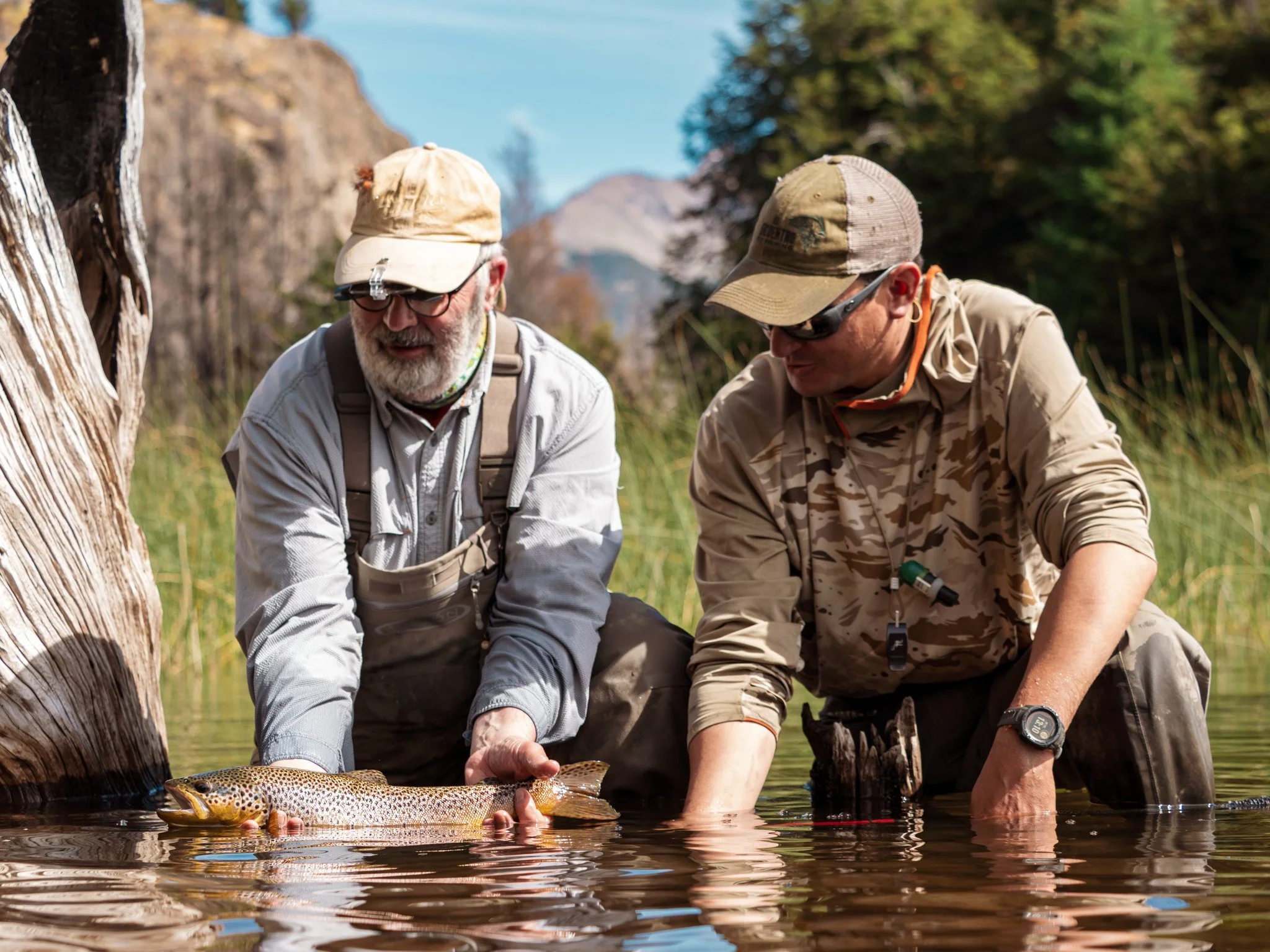
Fishing remains strong as fall settles in, and dry flies still produce consistently. However, this is also the period when serious anglers turn their attention to large brown trout. As these fish bulk up ahead of winter, streamer tactics can be especially effective for those hunting a true trophy.Many serious anglers prefer to run a separate fly box for each type of fly, allowing maximum organization in their bag. If you prefer to pack fewer boxes, be sure to segment your flies accordingly within the box and keep them organized, so you can quickly assess and change while you’re fishing. Look for fly boxes that will keep flies secure in the foam (handy to help keep things organized through travel and windy days on the water), and keep the interior of your fly boxes dry.
Once flies have been in the water, put them into a plastic baggie or keep them separate from the rest of your flies until you can thoroughly dry them. Putting a wet fly back into your box is a fast way to get the rest of your box musty and perhaps even rusty—both things we want to avoid.
Accessories
Bring along a sturdy pair of fishing pliers and/or nippers to help remove hooks, snug knots, and cut tippet. Your guide will have them too, but it’s a good idea to at least bring along your own pair of nippers to keep on hand for small tackle adjustments. Another key thing to pack is sunglasses: essential for any angler, in any fishery. Sunglasses protect your eyes from wayward flies as well as from the sun and are a good idea any time you’re on the water. Look for wrap-around styles that will help guard your eyes from reflective rays and provide a good line of sight. Always keep a spare of sunglasses with you, too. Accidents happen, and whether it’s a broken lens or a pair dropped overboard, it’s good to have a backup pair ready to be called into action.
Wading Gear
When you’re planning a Patagonia fishing trip, your rod and reel might get all the attention, but solid wading gear is just as crucial—maybe even more so.A dependable pair of breathable Gore-Tex waders will make a huge difference in how comfortable you stay throughout the week. There’s no substitute for bringing your own pair that you already know fits well and that you’ll be comfortable in throughout full days on the water. We typically wear waders through most of our fishing season, so while on warmer days we might be in t-shirts, we’ll often still be in waders.
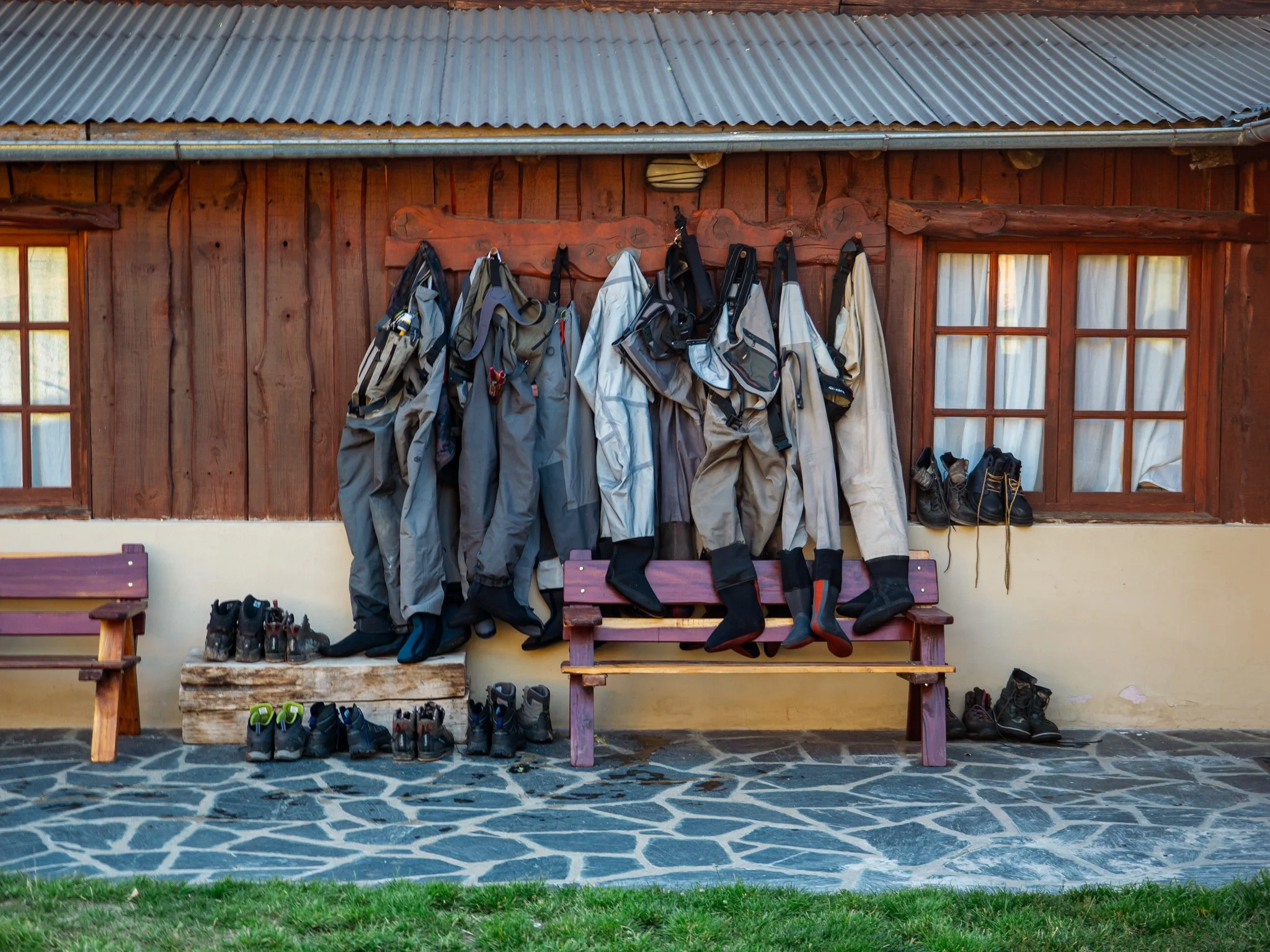
As for boots, stick with rubber or Vibram soles, which provide reliable grip and support on uneven terrain and avoid the concern of spreading potential to transporting and spreading aquatic invasive species (AIS) such as didymo or Zebra mussels. Avoid studded boots entirely; they can damage lodge boats and are typically not permitted.
Clothing
Just as with street clothing, fishing clothing is largely left to personal preference. Wear what makes you comfortable but keep this in mind: sun protection is king. Even if the air is brisk, we’re still in the open air and on the water, and it’s very easy to get a sunburn. A sun hoody is a great baselayer; while sunscreen is great it sweats or washes off more quickly than you’d guess, and physically protecting your skin from the sun is a good move.
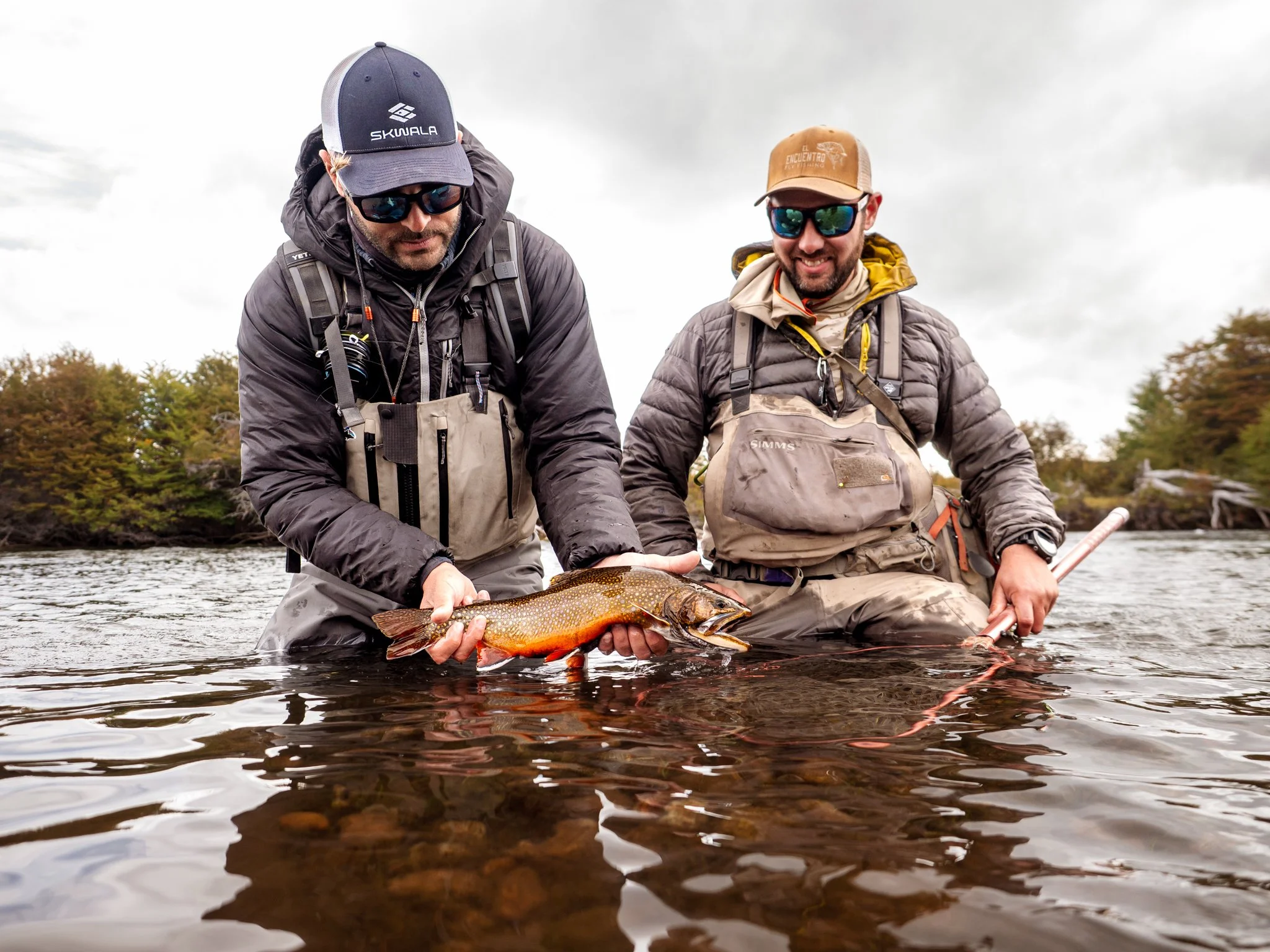
It's a good idea to also back along a gaiter to pull up along your neck and ears, and always bring a wading or rain jacket, even if the morning looks cloudless. When those rainy days strike, having a well-designed wading jacket can make or break your fishing day. Pack along plenty of layers, including an insulated jacket for cool mornings and evenings, fleece midlayers, warm baselayers, and sun-protective layers. A baseball cap is a good idea on the water to help keep the sun out of your eyes, and if you’re traveling in the spring or autumn bring along a warm winter hat (beanie) and gloves, too. Better to have too many layers and not need them then to be cold and miserable on the water.
The Little Things
Everyone has their own set of “personal items” they bring along for a day on the water. It’s a good idea to bring a waterproof bag or pack along, so you don’t have to worry about your personal items if it does decide to rain. Whether you prefer a boat bag, a backpack, or a sling pack, ensure you at least have a waterproof dry bag along to shove everything into when things get a little damp. Bringing along that tube of sunscreen (don’t forget your lips!), that warm hat and gloves, and any little comfort items you may want throughout the day. It’s a great idea to bring along creature comforts for the lodge as well; slippers can be a cozy retreat in your room at the end of a long day, and having an iPad or a laptop is a great way to stay connected. Even better, bring a book and leave the real world behind for a bit!
Above all, listen to what your guide has to say, and be open to trying new methods of fishing. Your first trip in Patagonia is a momentous occasion, and you’re going to enjoy it all the more if you relax, trust in the gear you’ve planned and prepared, and soak in every bit of the experience. You’re entering a whole new world of fly fishing… prepare to become addicted.
